

Space weather, satellite by satellite.
SKEION is a deep-tech start-up. We are building the forecast that will give satellite and power grid operators 24 to 48 hours to act on a solar storm, instead of less than one hour today.
- SKEION Ops Our software for satellite operators · demo on request
-
- RISE laureate 2026 (opens in a new tab) CNRS Innovation start-up programme




Warnings come late, and they don’t say what changes for you.
- Less than one hour.
- A storm’s real strength is measured only 15 to 60 minutes before it arrives.
- One number for the whole planet.
- Bulletins give a global level, not the effect on your orbit.
- May 2024.
- Nearly 5,000 satellites manoeuvred at once; the day-before forecast got the strength and duration wrong.
- February 2022.
- 38 of 49 newly launched Starlink satellites lost after a minor storm.
Sources: NOAA; Parker and Linares, MIT, 2024 (DOI 10.2514/1.a36164); SpaceX.

A real storm, replayed satellite by satellite.
SKEION Ops replays real storms, including May 2024, the strongest in twenty years. For each satellite, one screen:
- The risk
- The action to take
- The deadline for taking it
What SKEION Ops does
Per satellite: rise in drag against a calm day, position uncertainty from 6 to 72 hours, re‑entry date.
Also: where to point the antennas at first contact after separation, where to look for a satellite lost after a reboot, two atmosphere models side by side, a phone view for the on-call team and an assistant that answers in plain language.
It does not plan manoeuvres: it gives your flight dynamics team the data.
A 30-minute video call: a storm replayed on an orbit type close to yours.
Forecast in development.
Everyone waits for the eruption. We will model the Sun before it erupts.
- Why now
- Ships have marine forecasts, aircraft have aviation forecasts. Space does not yet.
Forecasts start once the eruption has left the Sun. Extreme storms are too rare for data alone to learn them; physics can.
Thirty years of research on the Sun. A team to turn it into a service that protects your assets.
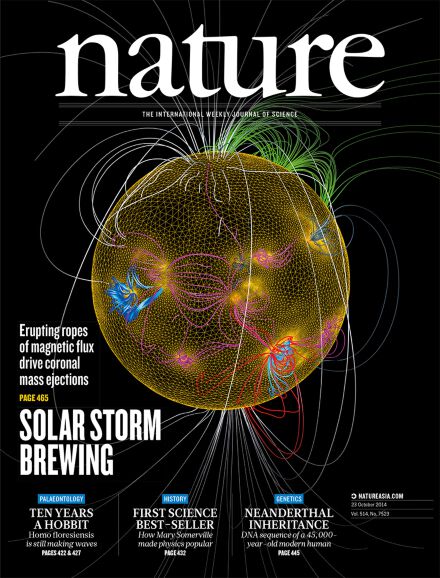
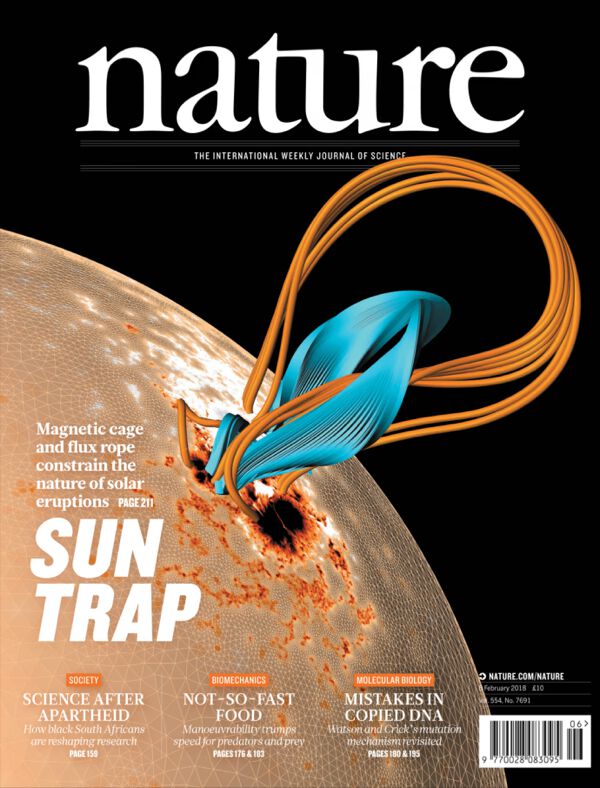
The flux rope, where an eruption builds up. Illustration.
Tahar Amari, research director at CNRS (CPHT, CNRS / École polytechnique), has shown how a solar eruption builds up and what can hold it back. SKEION is building its own forecasting engine on this published science.

Sofiane Amari
Founder and CEO

Tahar Amari
Director of Research, CNRS
-
Nature 514, 465 · 2014Cover, October 2014
Characterizing and predicting the magnetic environment leading to solar eruptions
Amari, Canou & Aly
-
Nature 522, 188 · 2015
Small-scale dynamo magnetism as the driver for heating the solar atmosphere
Amari, Luciani & Aly
-
Nature 554, 211 · 2018Cover, February 2018
Magnetic cage and rope as the key for solar eruptions
Amari, Canou, Aly, Delyon & Alauzet

Replay, adapt, forecast.
-
Replay
Today, demo on request
A past storm, satellite by satellite.
-
Adapt
Next, pilot projects
On your satellites and your data.
-
Forecast
Goal
One to two days ahead, with the margin of error.
Do you operate satellites or run a power grid?
We are looking for our first partners for pilot projects, in both fields.
Satellite and constellation operators
Atmospheric drag, uncertainty on position, manoeuvres to decide. In a storm the upper atmosphere swells: the satellite is braked, drops and runs ahead of its track, which skews collision checks and makes it miss its ground-station passes.
Power grids
Storms drive currents through high-voltage lines that can damage transformers. In the US, 91% of the losses forecasts help avoid concern power grids.
Source: NOAA, Space Weather Next Program Cost Benefit Analysis (2026).
Let’s see what a storm like May 2024 would change for your fleet.
Demo, pilot project, investment, press or research: tell us what you are working on. We reply within two business days.
Stay up to date with SKEION’s news.
A few emails a year, one-click unsubscribe.